

As you read this, American and Israeli missiles are striking Iran. And Iran is retaliating by striking Israel, and American military assets in the region. There is much to unpack as to the causes, likely outcomes, and broader consequences of this war, but that is outside the scope of this newsletter.
At Ink & Time we believe reading and understanding others is one step toward building bridges between people and across cultures. It is in fact, not a small step.
If you’re a reader, you’ll want to know what Iranian authors have created through their unique experience of modernity and to glean some texture of the civilization now involved in the global struggle. Here we profile amongst others:
The novelist who composed an entire book from memory during imprisonment.
A family farce so beloved its characters entered everyday speech, inspiring the most popular TV series in Iranian broadcast history.
The bestselling Iranian novel of all time of a family saga set during British occupation.
Most English-speaking readers may have heard about Persepolis and perhaps Reading Lolita in Tehran. Both are valuable books. But both, like many others, were written for, or mediated through, western audiences. They are merely the edge of a vast tradition.
Nearly all of the books featured here were banned under one regime or another, some under both the Shah and the Islamic Republic. This is not a commentary on regimes. Book banning is not unique to Iran, as the US and most states enact censorship.
What distinguishes these titles is not that their governments tried to silence them, but how Persian literature became continually more inventive and more extraordinary over the course of the 20th century.
Reading books will not resolve the current geopolitical crisis. What it will do is help us understand human complexity, beyond politically motivated stereotypes. Reading, at its best, is an act of bridge-building. These novels are a place to start.

1. The Blind Owl (Buf-e Kur) by Sadegh Hedayat, 1937
Written five years before Camus published The Stranger and a decade before European existentialism was named, Sadegh Hedayat's The Blind Owl is the book that launched modern Persian fiction, and one most English speaking readers have never heard of.
The narrator is an unnamed, opium-addicted pen-case painter in a state of psychological disintegration. He is obsessed with a woman he has glimpsed only through a ventilation hole in the wall. As the novel unfolds, reality, memory, and nightmare become indistinguishable. The prose moves like fever: hallucinatory, recursive, and possessed of a mania that operates below the level of plot.
Hedayat wrote it during the height of Reza Shah's forced secularization of Iran in the 1930s. He applied an experimental surrealist form because traditional Persian literary conventions failed to express the dislocations of a society being remade by decree. He published it first in a limited edition in Bombay, each copy stamped "Not for sale or publication in Iran." It appeared in Tehran only in 1941, after Reza Shah's abdication.
Parents forbade their children from reading it. Hedayat took his own life in Paris in 1951. And yet The Blind Owl became the book every educated Iranian has read, the foundation for every generation of Persian writers that followed. It is a peer of European modernism, not an imitator of it.
First translated by D.P. Costello (1957). Costello's remains the standard English edition, but a new translation by Naveed Noori has gained acclaim.


2. Prince Ehtejab (Shazdeh Ehtejab) by Houshang Golshiri, 1969
If The Blind Owl invented modern Persian fiction, Houshang Golshiri's Prince Ehtejab proved it could match any European novel for boldness in convention. Set in the 1920s, it reads like a literary autopsy of the old aristocratic order which was feudal, violent, and decadent: a rotten social compact that both the Shah's modernizers and the revolutionaries claimed to be replacing.
The last surviving heir of the deposed Qajar dynasty is dying of tuberculosis in his crumbling Isfahan palace. He is haunted, literally, by ancestral ghosts who step out of photographs on the walls. His grandfather crushed servants and brutalized women. His father used tanks to put down protesters. Ehtejab himself is feeble and ineffectual, and embodies his own cruelties. His dead wife taunts him with his ancestors' vigor while he coughs blood into silk handkerchiefs.
The narrative is fragmented and non-chronological. Golshiri refused to give the reader a stable timeline or a reliable perspective. The effect is gothic, claustrophobic, and formally closer to late Faulkner than to anything in the western image of Iranian fiction.
Translated as The Prince by James Buchan (2007). It is novella length, under 100 pages.
The Prince
In mid-1920s Iran in a crumbling house in a provincial …
www.goodreads.com/book/show/752467


3. Savushun (A Persian Requiem) by Simin Daneshvar, 1969
The bestselling Iranian novel of all time was written by the first woman to publish a novel in Persian. It sold over half a million copies in Iran and was translated into 17 languages. Simin Daneshvar studied creative writing with Wallace Stegner at Stanford on a Fulbright scholarship before returning to a country most Americans at the time could not find on a map.
Savushun is set in Shiraz during the British wartime occupation of Iran, an occupation that forced Reza Shah's abdication in 1941. Despite being virtually unknown in the West, it has become central to Iranian collective memory. Two brothers react in opposite ways to the British demand for their grain: one refuses to sell his people's food; the other sees an opportunity. The story is narrated through the eyes of Zari, the wife caught between them, whose growing political and social awareness is the story’s emotional engine.
Far from polemic, it’s a family saga told with what critic Hassan Abedini called "poetic, precise, and strong prose.” Iranian readers recognized their own experience in the novel, the mid-century social and historical forces distilled into characters they could relate to. Daneshvar was married to Jalal Al-e Ahmad, the most influential Iranian intellectual of his generation. Their literary marriage is one of the extraordinary biographical facts of twentieth-century Persian culture, and Al-e Ahmad appears next on this list.
Translated as A Persian Requiem by Roxane Zand (1990). Also translated as Savushun by M.R. Ghanoonparvar (2001).


4. The School Principal (Modir-e Madreseh) by Jalal Al-e Ahmad, 1958
Jalal Al-e Ahmad coined the term Gharbzadegi, roughly “West-struck-ness”: the idea that Iran was being fatally infected by blind imitation of the West. The concept became one of the most important ideological building blocks of the 1979 revolution.
The School Principal is a brisk, cynical novella about a disillusioned teacher assigned to run a crumbling school which represents society in miniature: no running water, endemic bribery, religion clashing with forced modernization, bureaucracy undermining every attempt at improvement. Al-e Ahmad's prose is social realism stripped to the bone, closer to Orwell's documentary essays than to anything decorative.
The western assumption that everything was fine under the Shah until the Islamic Revolution ruined it is deconstructed and exploded in his story. Al-e Ahmad shows a society already fracturing under the Shah's westernization program decades before 1979: corruption, inequality, and cultural dislocation are painfully visible in the daily life of a provincial school.
Translated by John K. Newton (1974). Novella length, approximately 135 pages.


5. My Uncle Napoleon (Daei Jan Napoleon) by Iraj Pezeshkzad, 1973
If Savushun shows what Iran suffered during the British occupation, My Uncle Napoleon shows how the people of the country laughed at it.
The setting is a sprawling Tehran mansion where three wealthy families live under the tyranny of a paranoid patriarch convinced the British are plotting against him personally. He was once a low-ranking officer in the Persian Cossack Brigade and in his memory it’s become a military career of Napoleonic grandeur. The narrator is his nephew, a high-school student hopelessly in love with Uncle Napoleon's daughter Layli. The novel spirals through farcical family feuds, sexual innuendo, escalating conspiracy theories, and a cast of characters so vivid that Iranians still use their names as shorthand. An ”Uncle Napoleon" is a conspiracy theorist, full stop.
The satire cuts deeper than it may appear. Britain did repeatedly interfere in Iran, motivating the 1953 coup, controlling oil revenues and actively manipulating governments. The paranoia Pezeshkzad satirizes is rooted in fact, which makes the comedy all the more rich. Azar Nafisi wrote that the novel, despite being "highly critical of the society it portrays," is also "the best testament to the complexity, vitality, and flexibility of Iranian culture."
In 1976, Nasser Taghvai adapted it into an eighteen-episode television series that became perhaps the most popular ever produced in Iran. Families gathered on Friday evenings to watch.
Translated by Dick Davis (1996). Davis is among the foremost translators of Persian literature.


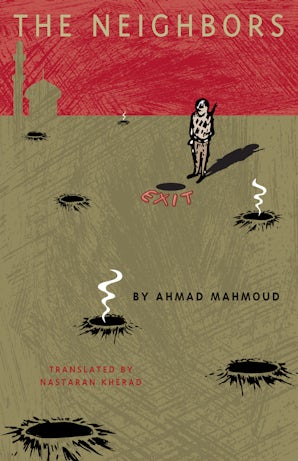
6. The Neighbors (Hamsayeha) by Ahmad Mahmoud, 1974
The single event most responsible for modern Iranian distrust of the West is the 1953 coup, in which the CIA and MI6 acted to overthrow Prime Minister Mossadegh and the democratic government he led, following his nationalization of the oil industry. While Western diplomatic histories provide a view from Washington and London, Ahmad Mahmoud gives offers the view from the street.
The Neighbors follows Khaled, a young man from a rundown neighborhood in Ahvaz, a city in southern Iran's oil-producing heartland. Exposed from an early age to poverty and political injustice, Khaled is drawn into the movement to nationalize Iranian oil. Mahmoud himself had been a day laborer, a baker, and a construction worker before becoming a novelist.
The novel was banned under the Shah for its political content, then objected to by the Islamic Republic for sexually explicit scenes. It was banned by both regimes for entirely different reasons. For four decades, this working-class perspective on the defining political event of modern Iran was simply unavailable to English-speaking readers.
Translated by Nastaran Kherad (2013). The late translation date is itself part of the story.

7. Missing Soluch (Ja-ye Khali-ye Soluch) by Mahmoud Dowlatabadi, 1979
This novel was composed entirely in its author's memory during imprisonment under the Shah. Mahmoud Dowlatabadi, widely considered the most respected Iranian novelist living in Iran, was prevented from writing anything down. "The story of Missing Soluch came to me all at once," he later said, "and I wrote the entire work in my head." When he was released, he wrote it down in seventy nights.
The book transports readers to a world rarely featured in western writing about Iran: a village in the rural northeast during the 1960s, on the cusp of the Shah's land reforms. Soluch, the patriarch of an impoverished family, disappears without explanation. His wife Mergan and their three children are left to survive amidst theft, starvation, predatory landowners, and a social order being dismantled by decree.
The Shah's land reforms are often cited in the West as a modernization success. Missing Soluch reveals the devastating human cost: the uprooting of centuries-old rural structures that drove millions into urban slums, creating the revolutionary underclass that would, within a decade, topple the Shah himself.
Dowlatabadi's other major work, the ten-volume, 2,590-page saga Kelidar, remains untranslated into English, a vast collection of missing pages that would provide invaluable perspective to those who have inadvertently been named adversaries.
Translated by Kamran Rastegar (2007). Shortlisted for the 2008 Best Translated Book Award.


8. Women Without Men (Zanan-e bedun-e mardan) by Shahrnush Parsipur, 1989
Five women arrive by different paths to live together in a garden on the outskirts of Tehran: a wealthy housewife, a prostitute, a schoolteacher, and two others. The year is 1953, the year of the coup, again. But Parsipur is writing something far different than political realism. One woman plants herself in the earth and is transformed into a tree. Another dies multiple times and returns, each time with new knowledge. A third sees all her male customers headless.
This is feminist magical realism that draws upon Islamic mysticism, not on García Márquez, a key distinction for lovers of literature. Parsipur's women claim autonomy through inner transformation, through sheer mythic will, not by adopting foreign frameworks of liberation.
In 2009, the renowned Iranian-American artist Shirin Neshat adapted the novel into a film that won the Silver Lion at the Venice Film Festival. In February 2026, just weeks before strikes began falling on Iran, Women Without Men was long-listed for the International Booker Prize, thirty-seven years after it was first published and banned.
Translated by Faridoun Farrokh (2004 reissue). The Booker shortlist announcement is 31 March 2026.


9. Censoring an Iranian Love Story by Shahriar Mandanipour, 2008
A writer named Shahriar, the author's alter ego, is trying to write a love story. Sara and Dara, two young Tehranis, meet in a library and pass secret messages in the pages of their favorite books. Every sentence must pass “Mr. Petrovich," the censor at the Ministry of Culture and Islamic Guidance. The novel includes both the text the writer wants and the sentences he knows will be struck-through on the page, visible but forbidden.
Mandanipour, winner of Iran's Golden Tablet Award for the best fiction of the previous twenty years. It was published first in English, a liminal existence between languages and countries that mirrors the divided text. The New Yorker, described the prose as "exuberant, bonhomous, clever, profuse with puns and literary-political references."
Now to close the circle on these selections. Among the books Sara wants to read, concealed within the pages of approved texts, is The Blind Owl, Hedayat’s 1937 masterpiece. Seventy-two years after Hedayat stamped his limited Bombay edition "Not for sale or publication in Iran," his novel is still being smuggled, in this case inside the pages of a fictional love story about the impossibility of writing freely.
Persian literary tradition remains alive and vibrant. It finds its way through censorship, politics, conflict and form, and it deserves to be read more widely.
Translated by Sara Khalili (2009).

Go Deeper into Facts and Context
If you want further context behind these novels, and the formative events in modern Iranian society here are a few nonfiction books are worth exploring:
Ervand Abrahamian's A History of Modern Iran (2018) for the scholarly foundation.
Hooman Majd's The Ayatollah Begs to Differ (2008) for a more personal, insider perspective on the paradoxes of contemporary Iranian society.
All the Shah’s Men, (2003) by Stephen Kinzer for a gripping, factual and honest account of how the toppling of Mohammad Mossadegh actually went down.
Political analysis tells you how a country works. Literature tells you how it feels.
In the current circumstances, feeling how others feel could not be more important, especially those in distant lands who are under siege.
Ink & Time brings you forgotten or overlooked literature that speaks to the present moment. If you value reading that builds understanding across cultures, share this with someone who needs it.