

I recently read Runaway Horses by Yukio Mishima.
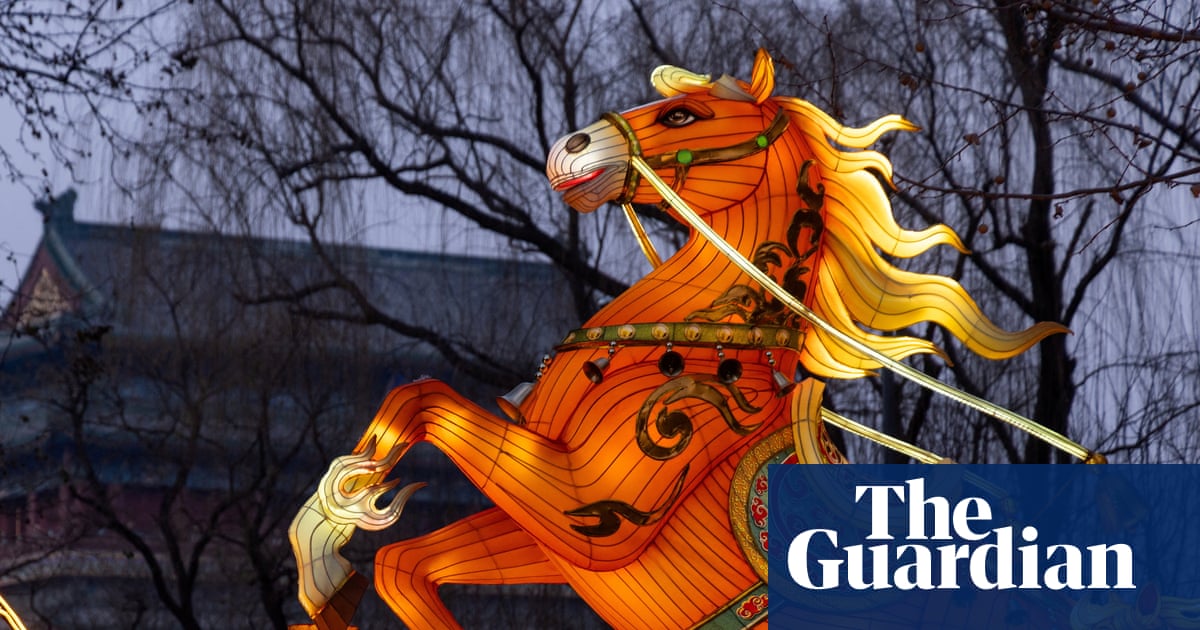
It felt darkly serendipitous, as we celebrated the Lunar New Year, hearing everyone talking about the “Fire Horse.” What does it mean in traditional lore, and what can we expect in the year ahead?
What happens if the metaphorical horse gets out of control? Is it already?
The last Year of the Fire Horse was 1966. In Japan, the birth rate fell by over 25 per cent, as otherwise rational, modern parents, feared bringing a hinoeuma child into the world. The Fire Horse, in East Asian tradition, is ungovernable: beautiful, spirited, destined to burn whatever stable tries to contain it. Daughters born under the sign were considered dangerous: they would ruin their husbands, refusing to be tamed.
It’s a superstition, possibly sexist, and easily dismissed. But metaphors matter because they influence thoughts and behaviors. They also provide a lens of perspective on social trends and to elevate above the turbulence of news drops and product releases.
This edition of Ink & Time looks at the wild horses of technology against the backdrop of Mishima’s classic tale of fate, reincarnation and the futility, worthy of debate, of intervening against divinely ordained events.
Runaway Horses is a biting tale of tragic idealism
Yukio Mishima published Runaway Horses in 1969, the second volume of his tetralogy The Sea of Fertility. Its protagonist, Isao Iinuma, is a talented young man whose sincerity is absolute. Rural-born, raised on nationalist ideals and samurai legends, trained in kendo, Isao comes to believe that only violent purification can redeem his country that has been corrupted by industrial capitalism and Western influence. He organises a small conspiracy to assassinate business leaders and restore what he sees as the Emperor's true sovereignty. He’s twenty years old. He’s not evil.
He is, in Mishima's telling, the purest character in the book. And that is the problem.
The Japanese title of the book is Honba: galloping horses, aka. runaway horses. Isao is the horse: all forward motion, no capacity for course correction. He can’t stop, as stopping would mean compromise. He’s unable to reflect, because reflection lets in doubt, and doubt is like a corruption. Honda is a cautious, aging lawyer who recognizes something fateful in the boy and tries to intervene. But, he fails.
No spoilers here. You should read the book. It’s excellent.
Mishima’s story provides a front-row seat to the turbulent events of 1930s Japan. But what it offers is more about the consequences when conviction, vitality, and total commitment to a cause fuse into a feeling and a momentum which outpaces any ability to pause and change course.
The runaway horse is lacking not so much in direction, but perspective, and restraint.

Gemini put itself in the lead, upon my prompt, “You choose the order of the race”
Idealism has morphed into irresponsibility and distorted our notions of progress
So as we lurch into 2026 and the Year of the Fire Horse, where are today's runaway horses? Look no further than your AI chat bots.
OpenAI, Gemini, Anthropic, and their Chinese counterparts at Baidu, Alibaba, and DeepSeek are engaged in what is now openly described as a race. There is no clearly defined destination. Acceleration has become a justification all its own.
Larger models. More compute. Faster deployment. Just win the race.
Nevermind job destruction, yawning inequality, atrophy of cognitive skills, scrambled minds, and the externalisation of existential risk to humanity. And to be clear, we are not anti-AI, we are just pro-honesty.
The AI race has become a prisoner’s dilemma fueled by business and investment orthodoxy.
Each generation of frontier model is released before any safety evaluation of the previous one is complete. Indeed, we have collectively lost sight of any practical approach to safety regulation. AI Agents have taken to building upon themselves and humans are just barely in the loop. The horses are on the loose.
The logic is structurally identical to Isao's: hesitation is weakness (remember that letter in 2023 advocating for a pause until we get our heads around AI) and the purity of the mission exempts it from sensible caution.
The builders of the tools are not villains, as such. Many are sincere, even idealistic professionals, convinced that artificial general intelligence will cure disease, solve climate change, and unlock broad prosperity. Their belief seems to be rooted in a twisted sense of purity, innocence even, some would say tarnished with naiveté.
It is also fueled by the promise of hyper-scaled financial rewards which have been distorted by loose monetary policy and “winner-take-all” economics, eroding an obligation to public good.
Like Isao, tech executives have constructed a worldview in which slowing down is beyond impractical, even morally suspect, because the benefits are so vast that delay itself is perceived as harmful.
OpenAI's charter is explicit about AGI benefitting "all of humanity." One could only wish for more specificity about how.
Granted, these are not identical situations. Isao's conspiracy involved a handful of swords and a willingness to die. AI development involves billions of dollars, tens of thousands of engineers, less and less as coding is outsourced to bots, and the active sponsorship of sovereign governments competing for technological supremacy.
The comparison is literary, not literal. But Mishima's message was less about swords, and more about the structural dynamics of human conviction: what happens when our internal logic disregards the question: what if we are wrong? What if like runaway horses we are running to the edge of a precipice that none of us can see coming?
In the story, Honda saw it coming and could do nothing.
Today some people see it coming: the alignment researchers, the governance scholars, the regulators drafting frameworks. They write papers, convene summits, propose guardrails. And the horse gallops on.
The institutions meant to restrain it are ill-equipped, and most are structurally slower than the thing they are trying to restrain. China may be an exception, but it too is locked in the race.

Gemini leashed itself, & proclaimed itself the winner, not very imaginative.
Brussels finalised its AI Act in 2024, yet by the time its provisions take effect, the technology it regulates will have been superseded twice over.
Isao's conspiracy outran the police. AI development outpaces its regulators not by months but by architectural generations.
For those concerned enough to drill deeper, it’s worth reading Dario Amodei’s recent long letter where he describes the consequences of creating a “country of geniuses.” He is positioning himself as one of those who sees it coming and cares, and it is likely that he genuinely does care.
But can he, and will he, do anything to control the horses, really?
And I am a fan of Claude, but with a healthy dose of caution.
Mishima understood that the most dangerous force in the world is not cynicism, but rather idealism that has severed itself from consequences.
It’s what makes Runaway Horses more than a period piece, and sharply relevant to our situation today. Isao doesn’t think about what happens after his assassinations succeed. The very act itself is the meaning.
In Silicon Valley, ‘what happens after we build it?’ receives roughly the same treatment.
The roadmap is always forward. The destination is always later. When pressed, the standard response is that safety work is happening in parallel, that responsible scaling policies are in place, that the adults are in the room. Perhaps.

What conversations are Mr. Amodei and Mr. Claude really having together?
The Fire Horse year will end in early 2027. The superstition will pass. But Mishima's metaphor has a longer half-life than the Chinese zodiac.
Runaway Horses is not a comfortable novel. Isao is magnetic, morally absolute, and utterly committed, and as the reader we watch him ride toward a cliff with the posture of dead certainty.
The tragedy is not that he was wrong. Parts of his diagnosis are accurate enough: the corruption and the capture of public institutions by private money.
The tragedy is that his response to a real world problem was so pure and so absolute that it destroyed him in the process.
In this Year of the Fire Horse, we need to ask: which of our runaway horses do we still believe we can steer, or even catch up to?
Technology is not the only runaway horse. There is spiraling geopolitical competition and conflict, looming and unpredictable impacts from climate change, and an economic model on a collision course with the biological systems that sustain life.
At what speed does sincerity become indistinguishable from recklessness?
The stable door is wide open. Everyone is standing flat-footed watching the horses bolt.
Recommended if you have further interest: I’m leaving the last word to someone I have been following, Nate Hagens, who provides an extremely articulate response to Amodei’s warning about a country of geniuses.
Ink & Time resurfaces classics of literature too often forgotten or overlooked as a means to promote real literacy, reflection and thoughtful consideration of the defining issues of our world, beyond the superficial and distorting lens of mainstream media.
If you appreciate this approach, subscribe and share with your friends.

Beware of riding Wild Stallions that are untamed, or even untamable